

History of Grama Panchayat
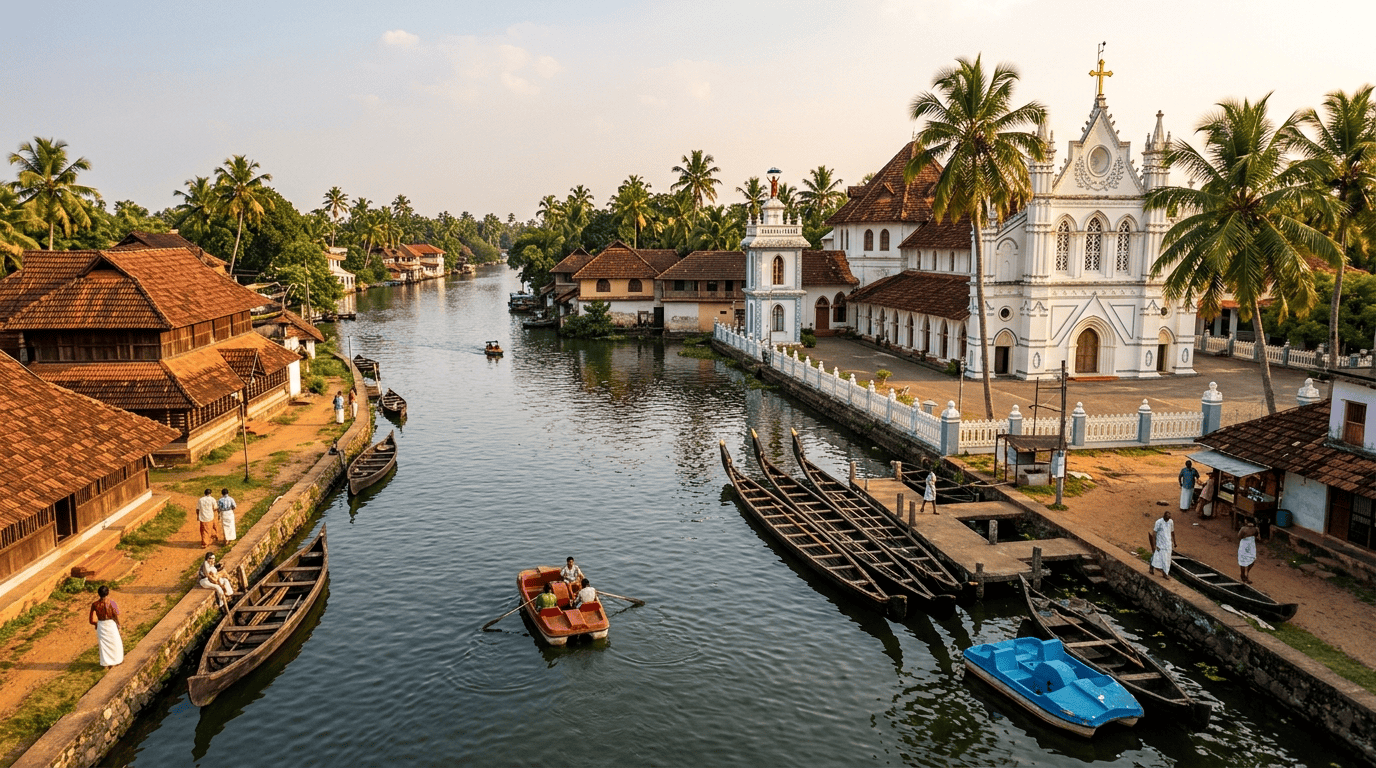
The area that was once a vast body of water is now Pulincunnoo . Strong outer bunds were built around this area to drain the water and make it suitable for paddy cultivation. This change, which combined nature and human labor, has turned Pulincunnoo into one of the centers of agricultural prosperity in Kuttanad. St. Joseph's School, established in 1898, is the first school in Pulincunnoo . This institution also has the distinction of being the first school started exclusively for girls in Kuttanad. Monsignor Zacharias Vachaparambil founded this school in 1927. The school began its operations at the place of Maleikkal Cheriyachan. This school was the foundation of the progress achieved by Pulincunnoo in the field of education.
The first government dispensary was started in the building of the Pulincunnoo Kurishupalli. With this, the modern medical system began in this panchayat. Later, in 1921, the government dispensary was shifted to the reclaimed land of 30 paras, which was given free of cost by Valiyapalli. It was later upgraded to a health centre and later developed into a taluk head quarters hospital in 1979. In addition to this, health institutions including a family welfare centre and a mother and child health centre (Kannadi) are functioning here.
There are about 15 co-operative societies registered and functioning under the Co-operative Societies Act in Pulincunnoo. More than 50 percent of the people of this panchayat, which has a population of over 17,000 adults, are members of some co-operative society. This shows the strength and people's participation of the co-operative movement in Pulincunnoo. The Pulincunnoo Dairy Co-operative Society, formed in 1976, is the first dairy co-operative society in Kuttanad taluk. The role of this group is crucial in strengthening the rural economy.
Dr. M. S. Swaminathan, a world-renowned agricultural scientist and architect of the Green Revolution, is a native of Pulincunnoo. His contributions to the field of agriculture are recognized worldwide. Pulincunnoo , with an area of 31.53 square kilometers, is the largest panchayat in Kuttanad taluk. This area, rich in land, backwaters, paddy fields, rivers, streams and ponds, is full of natural beauty.
Pulincunnoo holds an important place on the map of Kuttanad in terms of fish resources, clams and attukakka. Fishing and clam collection are the livelihood of many families here. Pulincunnoo , which stands as a harmony of nature and culture, continues to be the pride of Kuttanad even today.
Kuttanad – History, the Great Flood, and a Story of Survival
The 2018 floods were one of the worst natural disasters Kerala has ever faced. Although there were opinions that the 1924 floods were the worst, the 2018 floods turned out to be an event that shook the entire state of Kerala. Although the death toll was reduced due to the presence of modern rescue systems and technologies, the impact of the disaster was extremely terrible.
Continuous rains for several days in July and August 2018 caused floods, landslides and landslides across Kerala. Hilly areas were completely isolated. Transportation facilities were damaged. All sectors including power supply, fresh water supply, telephone networks were disrupted. The situation became extremely serious when the heavy rains were combined with the release of water from dams. The water level in the rivers rose by meters. Several kilometers of land was submerged. Many human lives were lost in this flood.
Double floods in Kuttanad
Kuttanad was hit by two major floods in 2018. The first flood was in mid-July. The water level in the Pampa River rose due to continuous rains. More than 98 percent of the fields were submerged and crops were destroyed. Many houses were flooded. Relief camps and food distribution centers were set up in various parts of Kuttanad. Many parts were damaged as the roads were flooded. Kuttanad was isolated from other areas after traffic stopped on the AC road for several days. When the rains subsided and the water level went down, people started returning to their homes. But in the meantime, the second flood arrived unexpectedly.
The Second Flood – A Terrible Disaster
2The low-pressure rains that began on August 12, 2018 continued till the 18th. By August 16, the situation became extremely serious with the release of water from dams like Pamba, Kakki, Moozhiyar and all the dams in Achankovilar and Pampa rivers. The floodwaters that broke the banks of the Pamba river engulfed Kuttanad within hours. The water level was rising with every passing moment. People who saw their houses, properties and farmlands submerged in water were heartbroken and sought refuge. Although the people of Kuttanad are not unfamiliar with floods, the 2018 floods were an unparalleled disaster. All 14 panchayats of Kuttanad were severely affected by this great flood. Life was completely disrupted, especially in areas including Pulincunnoo.
Lesson of survival
Although the great flood broke the heart of Kuttanad, it could not break the confidence of the people. After the disaster, the work of rebuilding houses, roads and farmlands began quickly. Government agencies, voluntary organizations and the general public joined hands to revive Kuttanad. These collective efforts were successful in restoring the chaotic life of the people to some extent. The strength of will and unity of the people of Kuttanad to overcome disasters became an example to the world. Kuttanad is a land that has experienced both the blessings of nature and the challenges of natural disasters. This land, full of history, tradition, struggle and survival, is a symbol of the soul of Kerala. Kuttanad and Pulincunnoo, which have risen again after overcoming the pain of the great flood, still stand as a living example of hope and hard work.